


Hospital Food Waste Management: A Planning Guide for NHS Estates and Facilities Teams
Hospital food waste management is the process of measuring, separating, storing and treating food waste from a hospital’s kitchens, restaurants and wards. Since March 2025 it has also been a legal requirement for hospitals in England, but it’s often left until late in a project.
From catering kitchens and staff restaurants to patient meals and ward areas, hospitals generate food waste across multiple departments. Managing it effectively starts with understanding where it comes from, preventing avoidable waste, and putting the right collection and processing arrangements in place.
This guide is for estates managers, facilities directors, and sustainability leads working on new builds or major refurbishments. It sets out what the guidance says, what needs to be considered early, and how to make informed decisions about food waste management.
Key takeaways
• Hospitals in England with 10 or more employees must separate food waste for collection under Simpler Recycling, in force since 31 March 2025.
• HTM 07-01 puts prevention first, then separate collection at source, removal at least daily and recovery rather than landfill.
• Food waste routes, storage, utilities and equipment space are far easier to design in at planning stage than to retrofit.
• Reliable baseline data on food waste by source underpins both waste reduction and the business case for any processing equipment.
Why hospital food waste management is a compliance issue
Several pieces of legislation and NHS guidance influence how hospitals should manage their waste:
• The Environment Act 2021 adds a legal responsibility to segregate waste streams, including food waste. NHS England’s Health Technical Memorandum 07-01 (HTM 07-01) lists it among the legislation that applies to healthcare waste.
• Simpler Recycling requires workplaces in England, NHS organisations included, to separate food waste for collection. The rules came into force on 31 March 2025 for workplaces with 10 or more employees, and hospitals are named in the scope.
• The NHS Clinical Waste Strategy doesn’t cover food waste directly, but HTM 07-01 draws on its target to cut waste arising by 15% by 2030, and its net zero aims apply to all waste types from NHS services.
Together, these requirements and objectives mean food waste needs a defined route, not an afterthought.
What HTM 07-01 says about food waste
HTM 07-01 covers food waste in Appendix 2, which sets out principles for organic waste, including food waste from kitchens and catering facilities.
Key considerations include:
• Prevention comes first. HTM 07-01 recommends measuring food waste from different sources, such as kitchen waste, plate waste, and unserved meals, to help identify opportunities to prevent it.
• Recovery follows. Once opportunities to prevent food waste are exhausted, the remaining waste should be collected for recovery rather than sent to landfill.
• Keep it separate. Food waste should be collected separately at source, in kitchens and cafeterias, and kept apart from other waste streams.
• Avoid prolonged storage. Removal at least daily is recommended, with storage areas cleaned after each removal.
• On-site treatment is an option. HTM 07-01 recognises this alongside collection for anaerobic digestion or composting, with outcomes depending on local arrangements. Options it describes include de-watering, aerobic digestion and in-vessel composting.
• Macerators are not preferred. HTM 07-01 notes that macerators send food waste to drain with no opportunity for recovery, so they sit low on the waste hierarchy.
The wider NHS Clinical Waste Strategy reinforces the value of better waste data, effective infrastructure, and more sustainable waste management. Although its primary focus is clinical waste, its sustainability objectives are relevant to the wider waste streams produced by NHS services.
You can read the NHS Clinical Waste Strategy and HTM 07-01 guidance for further detail.
Why food waste infrastructure must be designed in at the planning stage
Food waste arrangements can be harder and more expensive to change once a hospital is operational. For new builds and major refurbishments, considering the following areas early can help avoid unnecessary constraints later.
1. Understand the volume and source of food waste
Start by establishing how much food waste the site is likely to generate.
Where possible, use existing waste collection records, catering data, and waste audits to build a picture of current volumes. Separate the figures by source, such as kitchen preparation, unserved meals, and plate waste, to help identify where reductions may be possible.
For a new hospital, estimates should account for the planned catering operation, expected activity, and the number and type of food service areas.
Reliable baseline data will also help when comparing treatment options and assessing whether equipment is appropriately sized. A system such as the PRM Smart Weigh System can support ongoing measurement once the site is operational.
2. Plan the layout and movement of waste
Consider how food waste will move from the point where it is generated to its collection, storage, or processing area.
• Where will food waste be separated and collected?
• How will it travel from kitchens, wards, and catering outlets?
• Is there enough space for safe storage and movement?
• Can collection vehicles and service teams access the relevant areas?
• How will the site maintain hygiene and manage spills?
Food waste storage also needs careful management. HTM 07-01 highlights the importance of regular cleaning and avoiding unnecessarily extended storage periods, helping to reduce the risk of vermin and other hygiene problems.
3. Assess the space and services needed for equipment
If on-site processing is being considered, assess the installation requirements during the design stage.
Depending on the equipment, this may include the machine footprint, loading access, electrical supply, drainage arrangements, ventilation, cleaning access, and space for handling the processed material.
The equipment should fit the site’s workflow rather than create additional handling or operational challenges.
4. Consider staff responsibilities and daily operations
A food waste system only works if staff use it consistently. Decide who is responsible for segregation, moving waste, operating equipment, cleaning, and reporting. If catering is outsourced, make sure the hospital and its contractor both understand their responsibilities. Procedures should work during busy service periods and across shifts.
5. Decide how performance will be measured
Establish how the hospital will monitor food waste and assess the effectiveness of its management arrangements.
Useful measures may include:
• Food waste by source, department, or catering area.
• Changes in avoidable food waste.
• Waste collection frequency and associated costs.
• Volume of waste processed on site, where applicable.
• Equipment performance and maintenance.
• The destination of any processed output.
How PRM can help hospitals measure and manage food waste
For hospitals reviewing their food waste arrangements, the right solution may involve a combination of better measurement, improved segregation, and suitable processing equipment.
PRM offers two complementary solutions that can support different stages of a hospital’s food waste management strategy.
PRM Smart Weigh System: Track and report
You can’t reduce what you haven’t measured. The NHS Clinical Waste Strategy highlights the importance of consistent, high-quality data for decision-making and longer-term planning. For food waste, a clear baseline and regular review will help teams understand what is working and where improvements are needed.
Developed and manufactured in-house by PRM, the Smart Weigh System helps hospitals weigh, track, and report on food waste, giving estates teams the source-by-source data HTM 07-01 recommends.
Using RFID identification, the system can attribute waste to individual users and departments. Operators select the waste type being weighed, and automated reports provide insight into waste generation by type, user, and department.
This information can help hospitals identify areas of higher waste generation, monitor changes over time, and make more informed decisions about waste reduction.
Find out more about the PRM Smart Weigh System.
PRM Bio-Processor: Process and reduce
For sites where on-site processing is suitable, the PRM Bio-Processor offers another option.
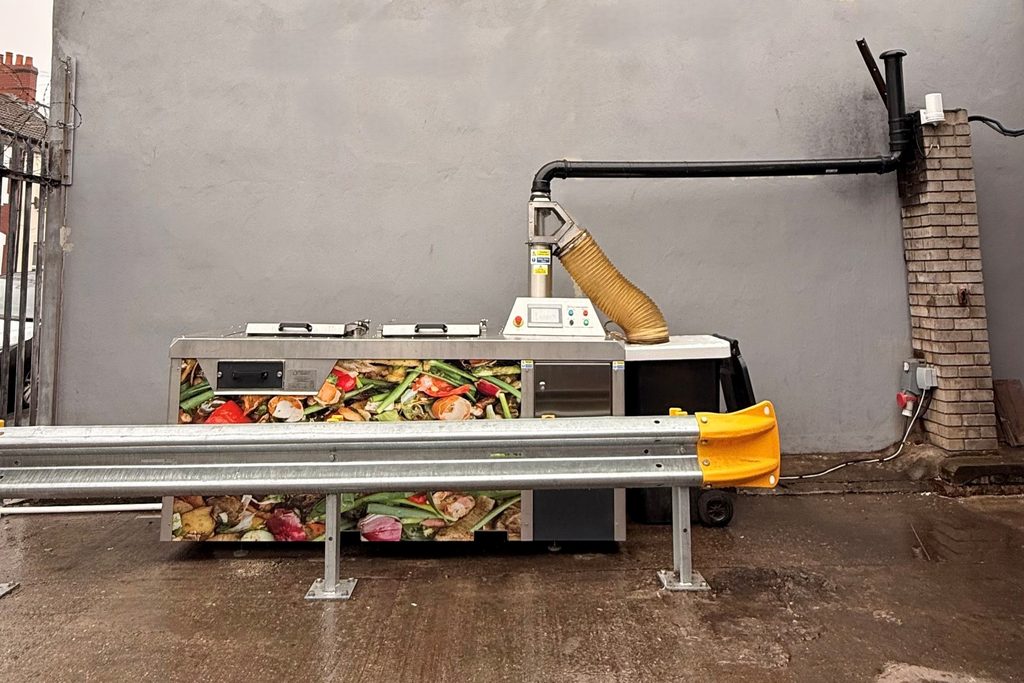
The Bio-Processor is an on-site aerobic food waste digester that uses oxygen and microbes to break down organic waste. It can reduce food waste volume by up to 80% over 24 hours, depending on the material being processed.
Potential benefits for a suitable hospital site include:
• Reduced waste volume: less material to store and handle before onward management.
• Fewer collections: depending on the site’s waste volumes and existing arrangements, it’s possible to reduce the frequency of collections.
• Improved day-to-day handling: food waste can be loaded directly into the machine, rather than relying solely on conventional food waste bins.
• Performance information: the PRM Portal provides information on processed volumes, volume reduction, and other performance indicators.
• Processed output: the machine produces a stable, dry substrate. It can be used as biomass boiler fuel, composted, used as a soil conditioner, or collected for anaerobic digestion.
Case study: Chelsea & Westminster Hospital installed a PRM P500 Bio-Processor to manage around 8 tonnes of food waste each month, with a reported volume reduction of approximately 80%.
Read the full Chelsea & Westminster Hospital case study to see how on-site processing can work in a healthcare setting.
Find out more about the PRM Bio-Processor.
Building a business case for your project
Before specifying equipment or changing collection arrangements, compare the available options against your hospital’s operational needs and long-term objectives.
A business case could include:
| Area | What to assess |
| Current waste costs | Collection charges, treatment costs, and any related service costs |
| Waste volumes | Amount generated, seasonal changes, and differences between departments |
| Labour and handling | Staff time spent moving, storing, and managing food waste |
| Space and infrastructure | Storage, access, utilities, and installation requirements |
| Equipment costs | Purchase, installation, operation, servicing and maintenance |
| Reporting | How volumes, costs, and performance will be measured |
| Compliance and sustainability | How the option supports Simpler Recycling, HTM 07-01 and the trust’s Green Plan and net zero commitments |
The Smart Weigh System can help provide the baseline data needed to inform these decisions, while a suitable processing solution may help address the practical challenges of managing the waste generated.
Talk to PRM about food waste solutions for your healthcare site
Effective hospital food waste management starts with understanding the waste your site generates and designing a system that works for the people who use it every day.
From weighing and reporting on food waste with the PRM Smart Weigh System to reducing waste volume with the PRM Bio-Processor, PRM Waste Systems can help you explore practical options for your healthcare site.
If you’re planning a new healthcare facility, refurbishing an existing site, or reviewing your current food waste arrangements, get in touch with PRM to discuss your requirements.
Contact our team to find out more.
Hospital food waste management FAQs
Is food waste separation a legal requirement for hospitals in England?
Yes. Under Simpler Recycling, workplaces in England with 10 or more employees, including hospitals, have had to arrange separate food waste collection since 31 March 2025. The Environment Act 2021 provides the legal basis for this requirement.
What does HTM 07-01 say about hospital food waste?
HTM 07-01 recommends measuring food waste by source, collecting it separately in kitchens and cafeterias, removing it at least daily and sending it for recovery, such as anaerobic digestion or composting, rather than landfill.
How often should hospital food waste be removed?
HTM 07-01 recommends removing food waste at least daily, cleaning the storage area after each removal, and clearing spills as soon as practical to reduce the risk of vermin.
Can hospitals treat food waste on site?
Yes. HTM 07-01 recognises on-site treatment, including aerobic digestion, de-watering and in-vessel composting. Suitability depends on waste volumes, available space, utilities and local arrangements, so it should be assessed at the design stage.
Sources
- NHS England, Health Technical Memorandum 07-01: Safe and sustainable management of healthcare waste (England)
- NHS England, NHS Clinical Waste Strategy
- GOV.UK, Simpler Recycling: workplace recycling in England
- GOV.UK, New rules simplifying recycling for workplaces in England come into force (31 March 2025)